NVIDIA Officially Unveils the RTX Spark: The ‘N1X’ Superchip Redefining Windows Laptops & DESKTOPS!
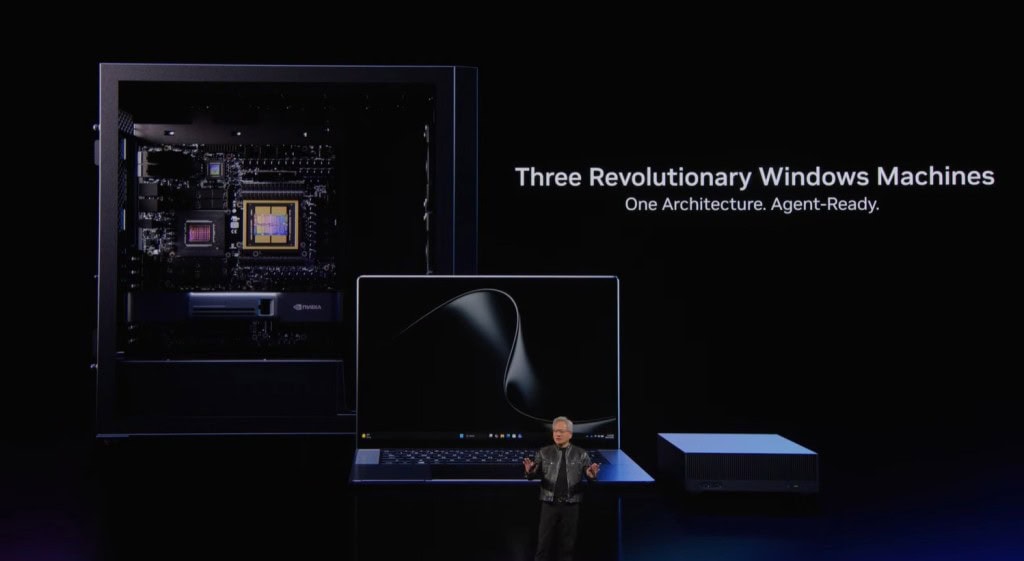
During his highly anticipated GTC Taipei keynote ahead of Computex 2026, NVIDIA CEO Jensen Huang officially laid to rest months of speculation. The long-rumored “N1X” processor is real, and it has arrived under a new, official moniker: the RTX Spark SoC. Positioning the new chip as the foundation of a “new era of PC,” Huang detailed a powerful, unified Windows on Arm platform designed from the ground up to transform personal computing into a seamlessly agentic AI experience.
The competition should be shitting their pants right about now!
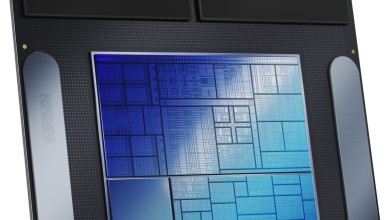
The RTX Spark (formerly referred to in leaks as the N1X for the extreme performance tier and N1 for the scaled-back version) is a massive two-chiplet system-on-chip that fundamentally alters the mobile hardware landscape. Moving decisively away from the traditional x86 dominance of Intel and AMD, NVIDIA has strategically partnered with MediaTek to deliver a custom, high-performance Arm-based architecture.

At the top of the stack, the fully enabled RTX Spark features a staggering 20-core CPU complex. This setup comprises 10 Arm Cortex-X925 performance cores paired with 10 Arm Cortex-A725 efficiency cores, capable of hitting peak clock speeds of 4.1GHz. But the true game-changer lies in the graphics compute. The CPU chiplet is linked via an ultra-fast NVLink C2C silicon bridge to a Blackwell-architecture GPU sporting 6,144 CUDA cores—delivering graphics performance directly in line with a desktop-class discrete GeForce RTX 5070.
| Specification | RTX Spark “N1X” (Extreme Tier) | RTX Spark “N1” (Base Tier) |
| CPU Architecture | Arm-based (MediaTek co-developed) | Arm-based (MediaTek co-developed) |
| CPU Cores | Up to 20 cores (10x Cortex-X925 + 10x Cortex-A725) | Up to 12 cores (8P + 4E) or 10 cores (7P + 3E) |
| Max CPU Clock | Up to 4.1 GHz | Up to 4.1 GHz |
| GPU Architecture | NVIDIA Blackwell | NVIDIA Blackwell |
| CUDA Cores | Up to 6,144 (RTX 5070 equivalent) | Up to 2,560 |
| Unified Memory | Up to 128GB LPDDR5X (16-channel, 256-bit) | Up to 64GB LPDDR5X (8-channel, 128-bit) |
| Memory Bandwidth | Up to 300 GB/s | – |
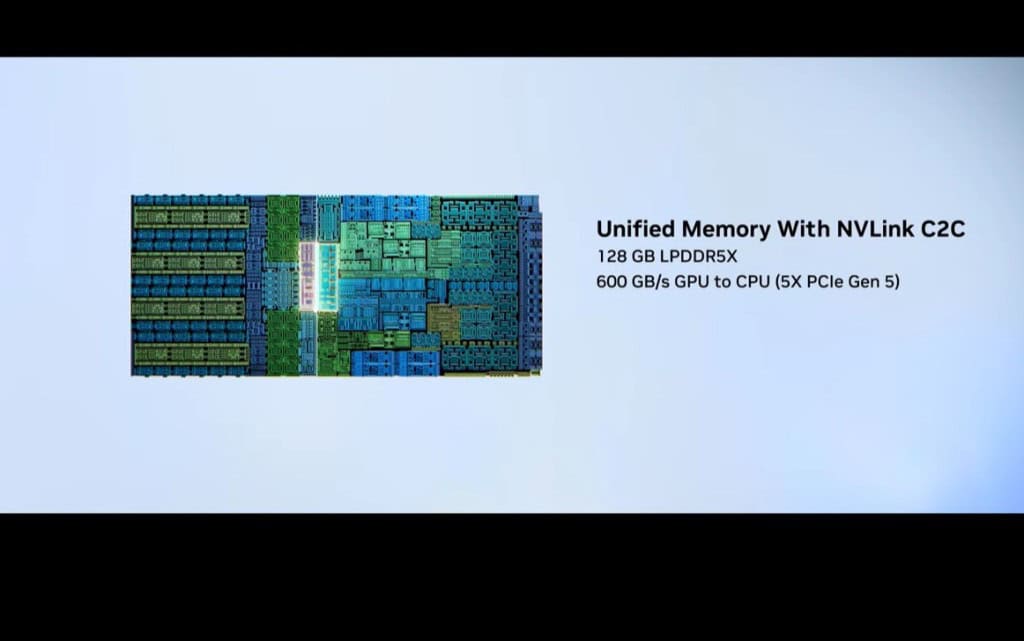
| Interconnect | NVLink C2C (600 GB/s bandwidth) | NVLink C2C |
| TDP | 45W – 80W (Base) | Up to 45W (Base) |
| Connectivity | PCIe Gen 5 + Gen 4 | PCIe Gen 5 + Gen 4 |
To feed this massive processing engine without bottlenecks, the RTX Spark supports up to 128GB of unified LPDDR5X memory, boasting memory bandwidths of up to 300 GB/s. This unified architecture ensures both the CPU and the Blackwell GPU have instant access to a massive shared memory pool, completely bypassing the traditional latency constraints of discrete mobile graphics setups.
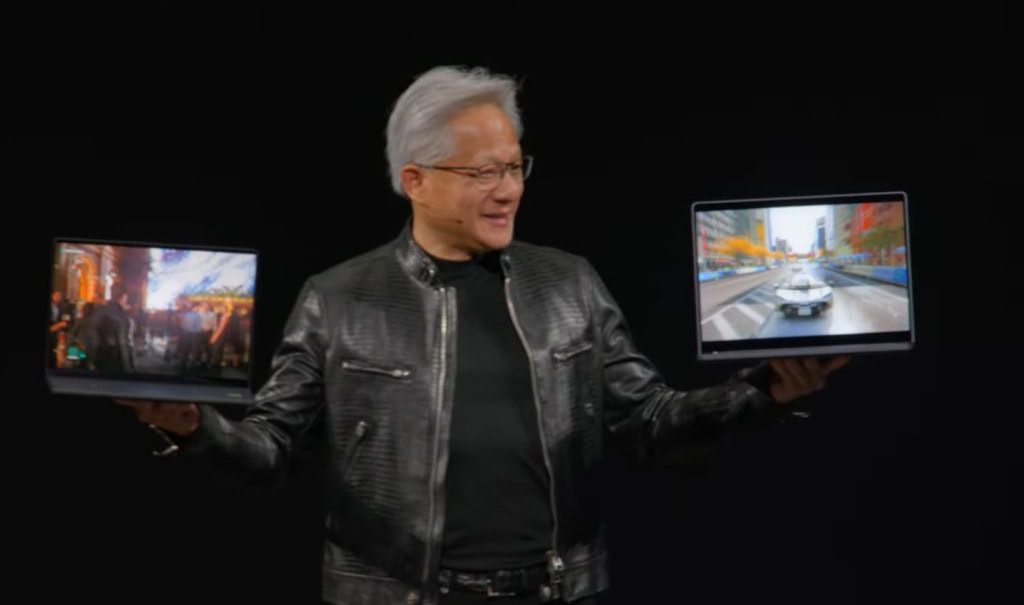
The Push for Agentic AI
While the raw hardware specifications are impressive enough to turn the heads of both gamers and creative professionals, Huang’s keynote made NVIDIA’s primary, long-term objective incredibly clear: artificial intelligence.
NVIDIA envisions the RTX Spark as the hardware backbone for a true “agentic AI OS,” fundamentally shifting how users interact with the Windows ecosystem. Instead of relying purely on the traditional point-and-click or keyboard inputs that have defined computing for decades, NVIDIA expects local AI agents to act as the primary interface. These agents will interpret natural language commands, call upon various tools, set intermediate goals, and work autonomously in the background. Running these sophisticated, long-term AI models locally requires immense compute power and vast amounts of fast memory—precisely what the RTX Spark’s GPU and massive 128GB memory pool are designed to provide, all without draining a premium laptop’s battery in minutes.
Disrupting the Status Quo
The official announcement of the RTX Spark marks NVIDIA’s most aggressive entry into the PC processor market to date. It directly challenges Qualcomm’s latest Snapdragon X elite series, while simultaneously threatening the established x86 guard of Intel and AMD. By combining MediaTek’s low-power Arm expertise with NVIDIA’s undisputed graphics and AI dominance, the RTX Spark threatens to entirely consolidate the premium laptop segment.
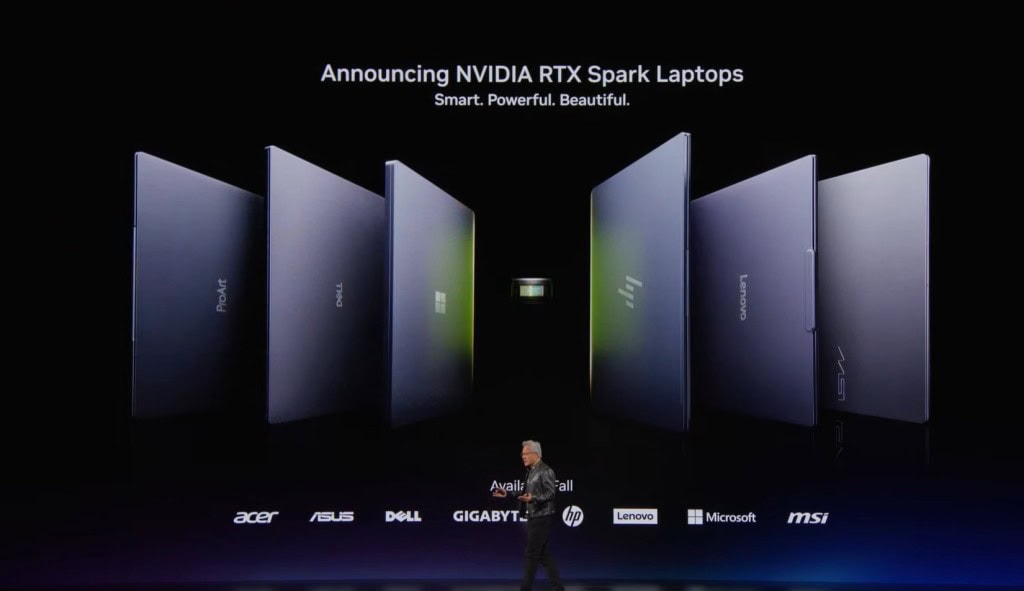
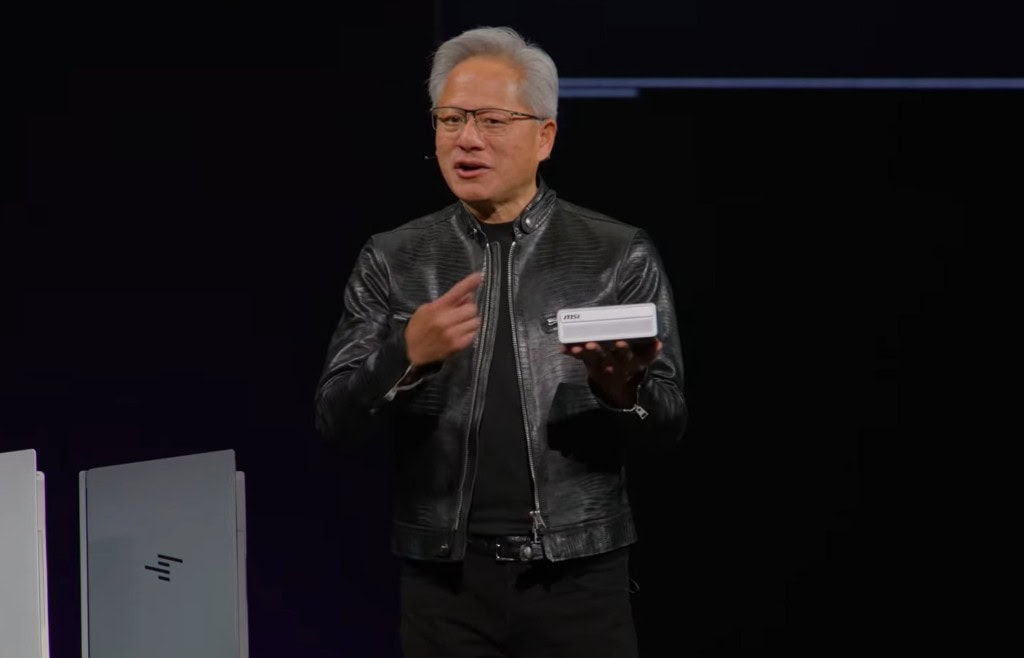
With major OEM partners—including Dell, Lenovo, Asus, and MSI—already confirmed to be building flagship systems around the chip, the RTX Spark is slated to hit retail shelves this fall. Whether it can fully overcome the historical x86 emulation hurdles that have traditionally plagued Windows on Arm platforms remains to be seen. However, if Jensen Huang’s Computex presentation is any indication, the RTX Spark isn’t just a new mobile CPU; it is the ambitious blueprint for the next decade of personal computing.
Bringing the N1X to the Desktop
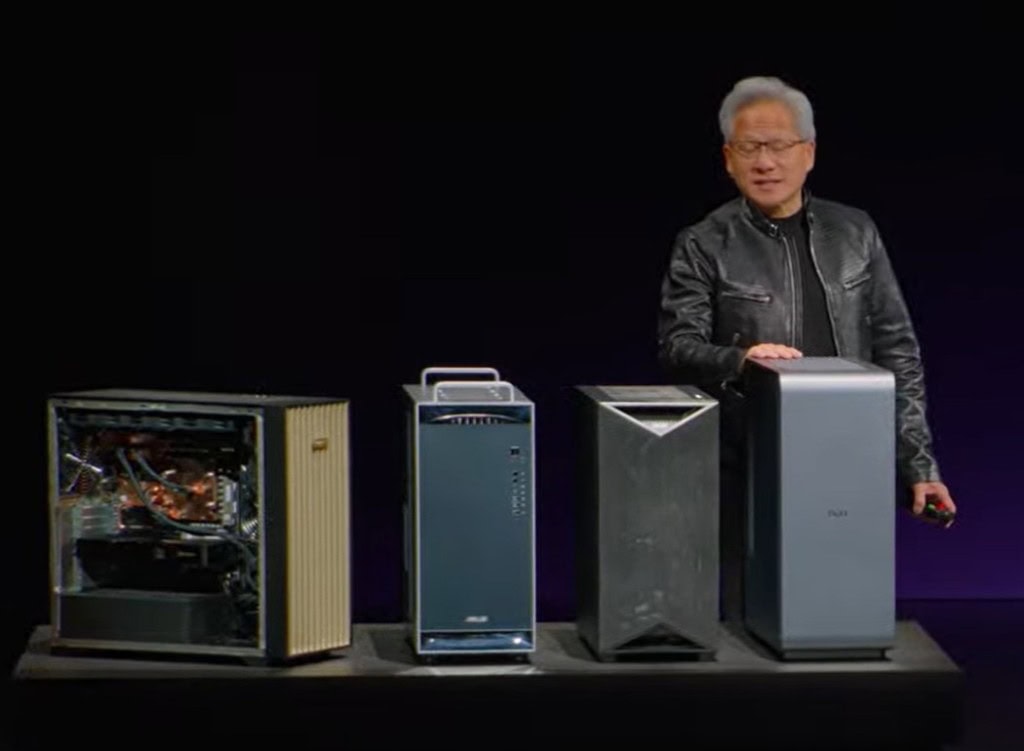
While premium laptops are a major focus of the RTX Spark platform, NVIDIA is not leaving desktop users behind. The N1X architecture is also slated to power an array of small form factor (SFF) desktop systems and mini-PCs arriving this fall. Expanding upon the foundation of the developer-focused DGX Spark mini-AI workstation, these consumer and enterprise desktop units will leverage the same massive 20-core CPU and Blackwell GPU architecture. By utilizing the N1X in a plugged-in desktop environment, OEMs can unleash the silicon’s true potential with higher transient power limits and robust cooling solutions. This makes these compact machines incredibly potent for local AI development, heavy content creation, and running demanding agentic workflows directly from your desk without the massive footprint of a traditional tower.