Google’s “TurboQuant” and the 2026 RAM Crisis: A Glimmer of Hope?
Google’s TurboQuant AI-compression algorithm can reduce LLM memory usage by 6x


Google’s “TurboQuant” and the 2026 RAM Crisis: A Glimmer of Hope?
As we move through 2026, the tech world is gripped by what analysts have dubbed “RAMmageddon.” With AI data centers now consuming an estimated 70% of global DRAM production, the supply for consumer PCs and smartphones has reached a breaking point. Prices for standard DDR5 kits have surged by over 50% in the last year, leaving gamers and creators facing a stark reality: memory is no longer a cheap “tack-on” component, but a major financial hurdle.

However, a recent breakthrough from Google Research, titled TurboQuant, might be the key to de-escalating this crisis.
What is TurboQuant?
Announced in late March 2026, TurboQuant is a sophisticated compression algorithm designed to address the “memory wall” in Large Language Models (LLMs). Specifically, it targets the Key-Value (KV) cache—the part of a model’s memory that stores conversational context. As AI chats get longer, this cache explodes in size, requiring massive amounts of High-Bandwidth Memory (HBM).
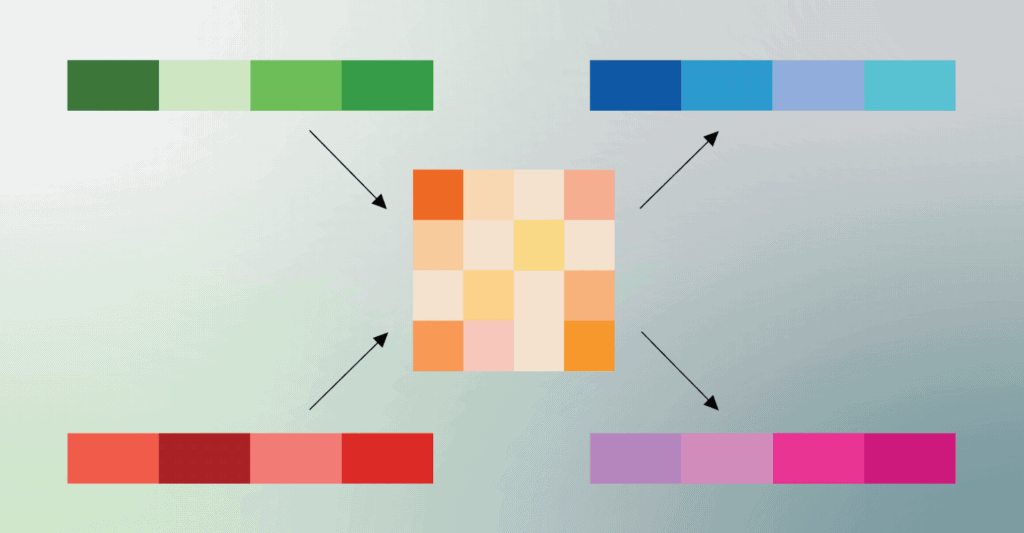
Google’s new technology can shrink this memory footprint by up to six times with “zero accuracy loss.” By using a combination of “PolarQuant” (which converts data into a more compact mathematical shorthand) and “QJL” (a 1-bit error-correction trick), TurboQuant allows AI models to do significantly more work with vastly less physical hardware.
The Impact on RAM Pricing
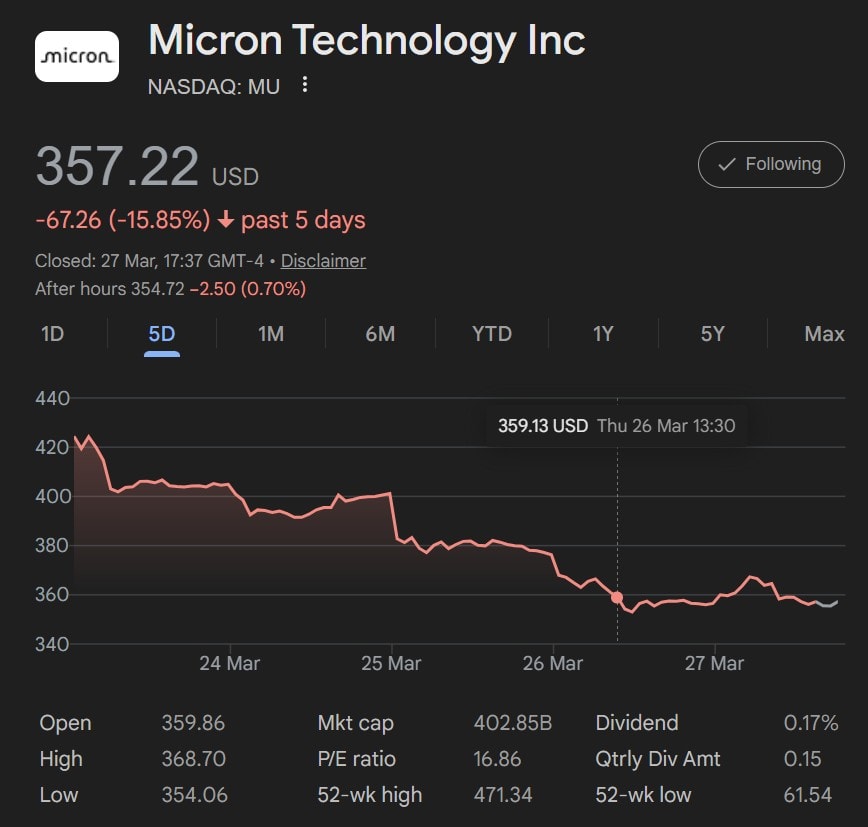
The immediate market reaction was telling: shares of major memory manufacturers like Micron, Samsung, and SK Hynix dipped slightly following the announcement. Investors are beginning to realize that if the world’s largest AI players can suddenly run their models on 1/6th of the memory, the “insatiable” demand for DRAM might actually have a ceiling.
-
Supply Redistribution: If Google, Meta, and Anthropic adopt TurboQuant-like efficiencies, the pressure on HBM production lines may ease. Since HBM is built using the same base DRAM dies as consumer RAM, any reduction in server demand theoretically frees up “wafer space” for the DDR5 sticks used in gaming PCs.
-
Delaying the Price Peak: Before this tech, experts predicted RAM prices would rise another 55-70% by the end of 2026. TurboQuant introduces a “deflationary” software force. While it won’t crash prices overnight—due to the massive backlog of data center orders—it may prevent the worst-case pricing scenarios for 2027.
-
Local AI Accessibility: Perhaps most importantly for the average user, this tech allows complex AI to run on 24GB or 32GB of RAM instead of requiring 128GB workstations. This reduces the “specs race” pressure on manufacturers, potentially stopping the trend of $1,500 “entry-level” laptops.
The Jevons Paradox Warning
Critics and some analysts caution against total optimism, citing the Jevons Paradox: as a resource becomes more efficient to use, we often just use more of it. If Google makes AI 6x more efficient, companies may simply build models that are 6x larger, keeping the demand for RAM at its current fever pitch.
Verdict for 2026
While TurboQuant is a revolutionary software bridge, it is not an instant cure for the hardware shortage. For the remainder of 2026, expect RAM prices to remain at historic highs. However, Google has proven that the “AI tax” on memory isn’t permanent. We are moving toward a future where clever math, rather than just more silicon, dictates how much power we have at our fingertips.