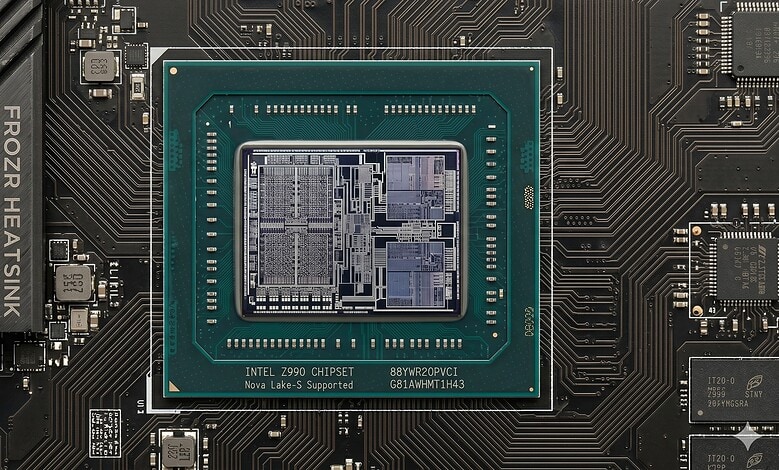
Intel Z990: The Next-Generation Enthusiast Platform
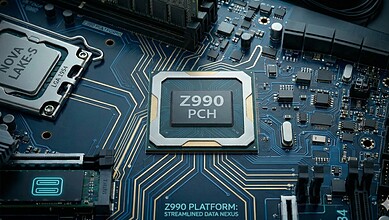
Intel is preparing a massive architectural shift for its desktop platforms with the upcoming 900-series chipsets. Designed exclusively to house the “Nova Lake-S” (expected to be branded as the Core Ultra 400 series) desktop processors, the flagship Z990 boards are gearing up to be a powerhouse for hardware enthusiasts and extreme overclockers.
Core Specifications and Architecture
The Z990 chipset brings several ground-up redesigns to Intel’s hardware ecosystem, starting with the physical interface and expanding into massive I/O improvements.
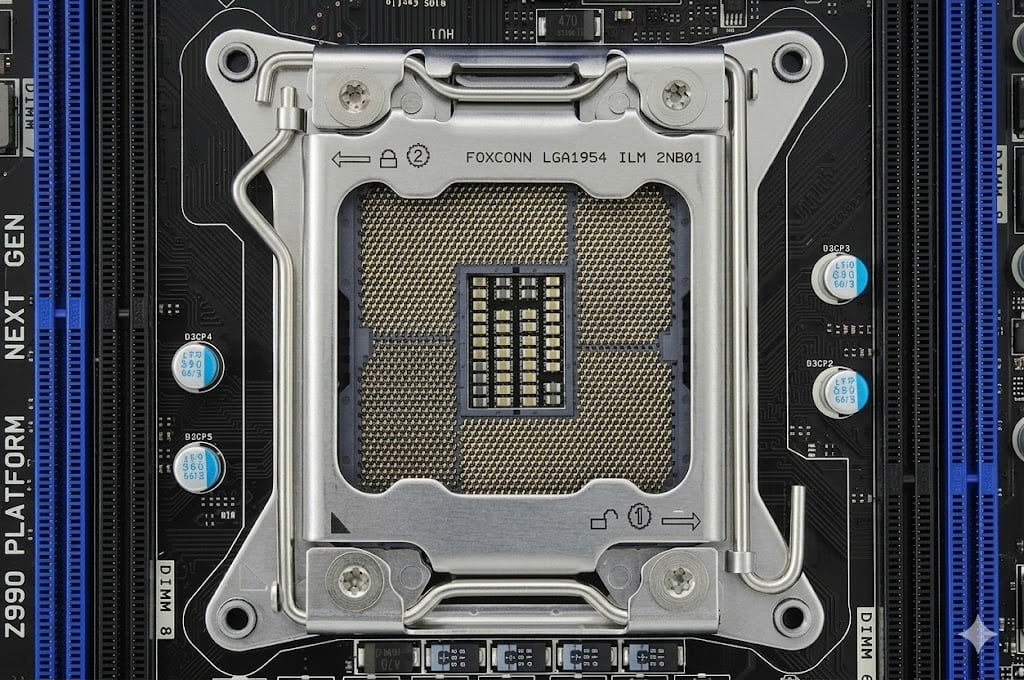
The LGA 1954 Socket
Motherboards will feature the all-new LGA 1954 socket. This physical change means that older hardware designed for the LGA 1700 or 1851 sockets will be entirely incompatible.
Massive Bandwidth Upgrades
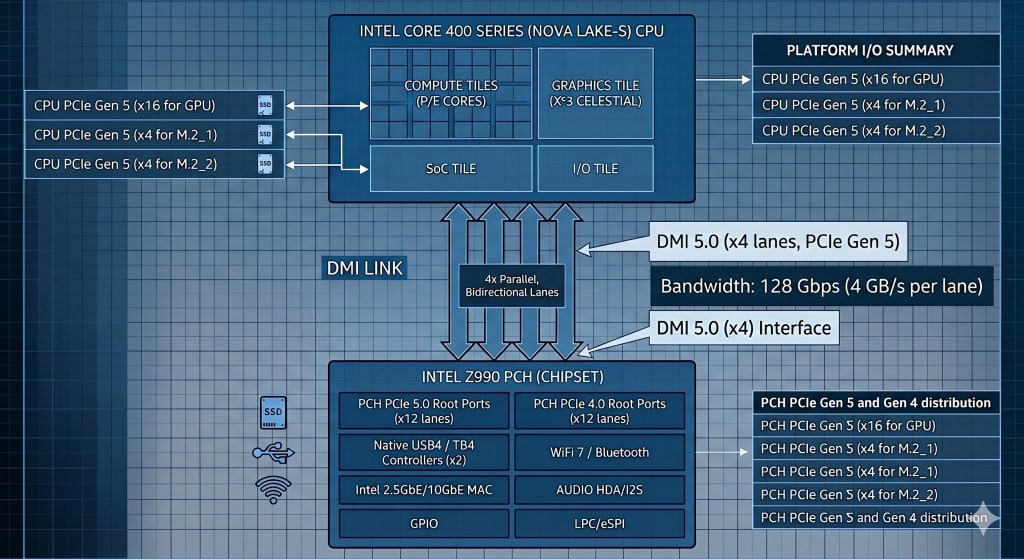
The DMI link connecting the CPU to the chipset receives a major generational upgrade to DMI Gen 5 x4, delivering an astonishing 128 Gbps of bandwidth, double what was available before.
Unprecedented PCIe 5.0 Integration
The Z990 platform will support up to 36 total PCIe 5.0 lanes. Crucially, the chipset itself will provide 12 PCIe 5.0 lanes directly, which is completely separate from the CPU’s own 24 PCIe 5.0 lanes (typically split into 1×16 for a discrete GPU and 2×4 for Gen5 NVMe storage).
So far, these 12 PCH sourced PCIe 5.0 lanes seem to be reserved for storage convenience only in a 3×4 PCIe 5.0 lane tracing configuration, and will not be able to sustain a 8 lanes dedicated PCIe 5.0 lanes GPU export (DMI limitations apply).
Native “Out of the Box” Speed Jump to 8000 MT/s
On previous platforms like Z890, the official base specification for standard memory maxed out at lower tiers (such as 5600 MT/s or 6400 MT/s), with anything higher technically classified as an out-of-spec overclock.
The Z990 platform explicitly pushes boundaries by offering native support for up to DDR5-8000 in optimal 1-DIMM-per-channel (1 DPC) configurations. Because 8000 MT/s will sit within Intel’s official baseline, memory training algorithms, system stability margins, and out-of-the-box compatibility at ultra-high frequencies will be significantly tighter and more reliable.
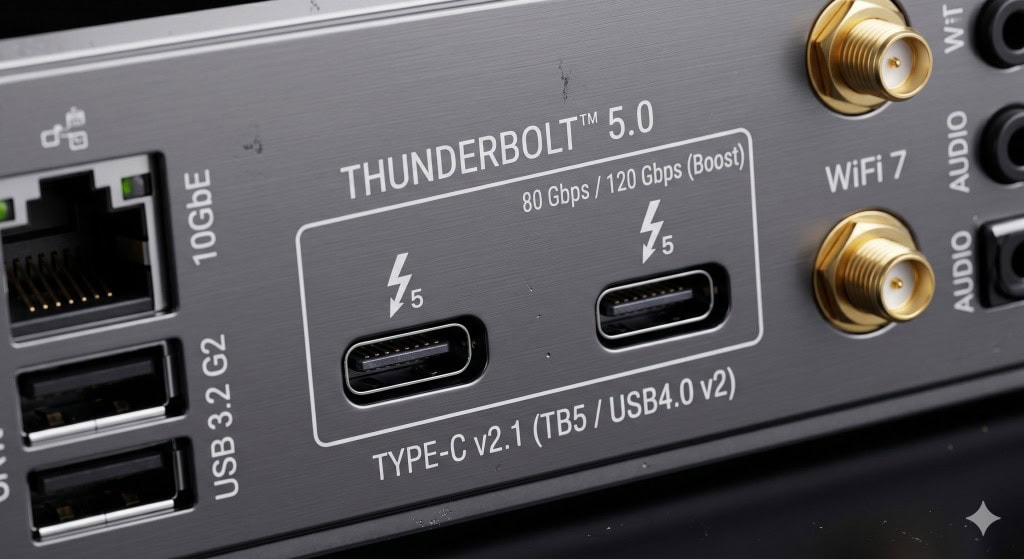
THUNDERBOLT 5.0
Thunderbolt 5.0 natively shifts the core connectivity tier from Thunderbolt 4 up to Thunderbolt 5 (USB4 v2), running straight out of the CPU’s integrated I/O logic. This provides that massive 80 Gbps symmetric / 120 Gbps asymmetric bandwidth boost natively, bypassing the traditional bottlenecks.
Extreme Power Delivery
Top-tier “Nova Lake-S” SKUs will feature a complex dual-compute tile design, alongside a new integrated “bLLC” cache. With reported power limits potentially spiking upward of 700W under extreme loads, Z990 motherboards will require incredibly robust, over-engineered VRM (Voltage Regulator Module) setups to maintain stability.
Expected Pricing
While official MSRPs have not been finalized by board partners, the cutting-edge nature of these components firmly points toward premium pricing. The transition to a new socket, the necessity of reinforced power delivery systems to support extreme thermal design powers (TDPs), and the strict material requirements to maintain PCIe 5.0 signal integrity will all inflate manufacturing costs.
Entry-level Z990 motherboards will likely start in the $300 to $400 range. High-end and flagship “halo” models—featuring extensive water-cooling armor, full overclocking toolkits, and premium audio DACs—could easily push well past the $800 to $1,000+ mark, continuing the upward pricing trend seen in recent motherboard generations.
Availability and First Models
Current supply chain leaks and industry roadmaps point toward a targeted launch in late 2026, aligning with the rollout of the Nova Lake-S desktop processors.
-
Initial Reveal: We anticipate a limited enthusiast release or a formal “paper launch” from top board partners like ASUS, MSI, and GIGABYTE in Q4 2026.
-
Broad Retail Availability: A wider, global retail release is heavily rumored to align with CES 2027 in January of that year.
-
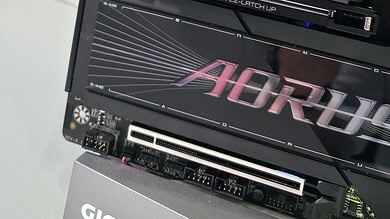
The First Wave: Manufacturers will undoubtedly launch their flagship overclocking and gaming brands first (such as the ROG Maximus, MEG, and AORUS Xtreme lines). During this initial rollout, expect these early models to heavily favor E-ATX form factors to properly accommodate the complex circuitry and cooling necessary to push Nova Lake chips to their absolute limits.